
How Bitcoin Mining and Digital Finance Impact Copper Prices
The problem most people in the trade have is that they don’t see the connection between their computer screen and their scrap bin. They hear about “crypto mining” or “blockchain” and they assume it’s a world for kids in hoodies. They are restless because they see the world changing around them, and they feel like the old-fashioned business of scrapping metal is losing its relevance. They worry that as physical cash disappears, the need for the metal that built the banks will disappear too.
The solution is to realize that digital finance is the most power-hungry industry we have ever created. A single “mining farm” used to secure digital currency can use as much electricity as a small city. All that power doesn’t just appear. It has to be moved, transformed, and cooled. That means copper. When you understand the “physicality” of digital money, you start to see that every new financial “coin” or “app” is actually a giant magnet for copper demand.
The Physical Heart of Digital Money: ASIC Miners
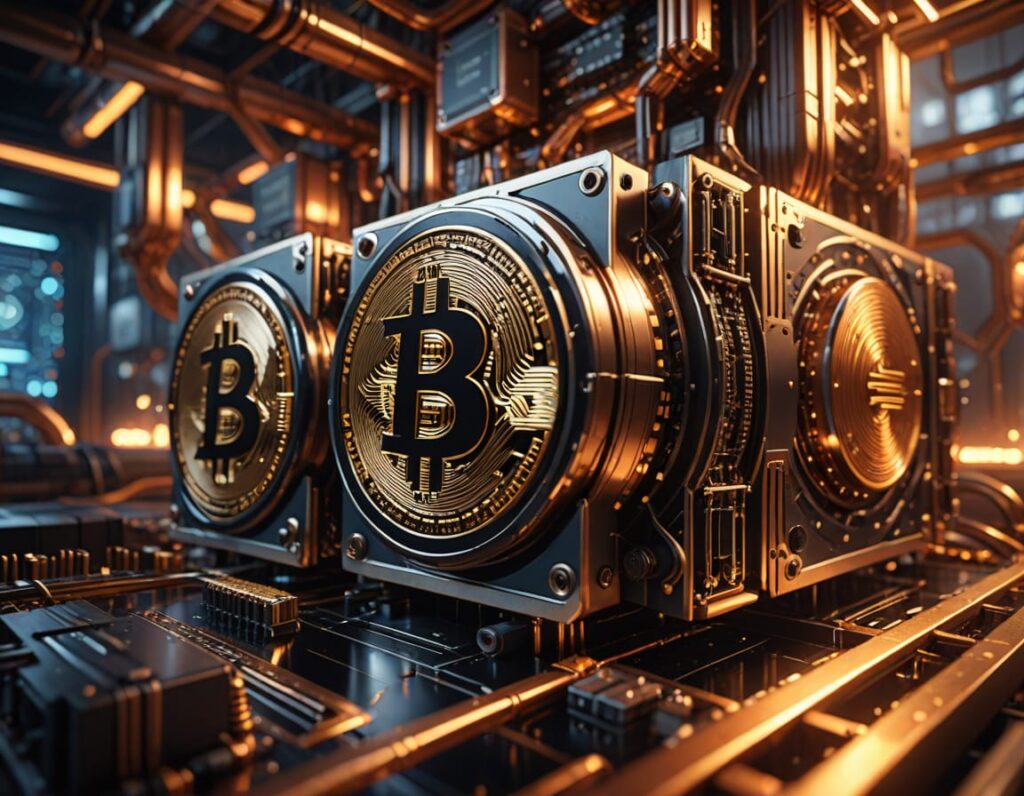
In the early days, folks mined digital currency on regular home computers. Those days are gone. Now, it is done by specialized machines called “ASIC” miners. These are heavy boxes designed to do one thing: run calculations as fast as possible.
If you get your hands on a decommissioned mining rig, don’t just treat it like a regular PC. These machines are built with high-performance components that are packed with copper.
- High-Wattage Power Supplies: A regular computer might have a 400-watt power supply. A mining rig often has two or three 1,600-watt units. Inside those power supplies are thick copper coils and heavy-gauge internal wiring.
- Heat Sinks and Bus Bars: Because these machines run 24/7 at full speed, they generate massive heat. The heat sinks are often solid copper or copper-base aluminum. To move power between the machines, these farms use the same heavy copper bus bars we talked about in the data center section.
- The Cooling Infrastructure: Massive fans and industrial HVAC systems are required to keep these rigs from melting. That means miles of copper tubing and large-scale copper-aluminum radiators.
The Financial Grid: Powering the Banks
It isn’t just about crypto. Think about the big banks. They are moving away from paper and toward 24/7 digital processing. This requires “Zero-Downtime” data centers. These buildings are the most copper-dense structures on the planet.
Why? Because they can’t afford to lose power for even a second. To ensure this, they use massive “Uninterruptible Power Supply” (UPS) systems. These systems are basically giant rooms full of batteries and “Transformers.”
A transformer is a scrapper’s dream. It is essentially a giant block of steel with two massive coils of copper wire inside. These coils take high-voltage power from the street and turn it into low-voltage power for the servers. In a financial data center, these transformers are huge, and the copper windings inside can weigh hundreds or even thousands of pounds. When these buildings get upgraded – which they do every few years – the old transformers hit the secondary market. If you know how to process them, you’re looking at a serious payday.
The Network Effect: Why Demand is Skyrocketing
As the world moves toward a unified digital financial system, the demand for “Grid Stability” goes up. The old electrical grid wasn’t built for this. To upgrade the grid to handle the load of the digital economy, utility companies have to replace thousands of miles of old lines and upgrade every substation in the country.
The primary material for those upgrades is copper. We are talking about massive underground cables and heavy-duty switchgear. The financial revolution is forcing a global rebuild of our electrical infrastructure. This “hidden” demand is why the price of copper is being propped up even when other parts of the economy seem slow. The banks and the miners need the metal more than the homebuilders do.
The “Secret Sauce”: The Transformer “Windings” Test
I want to give you a tip that will save you a lot of back-breaking work. When you find a large transformer – whether it’s from an old bank basement or an industrial site – you have to know what is inside before you buy it or haul it.
Did you know?
Not all transformers are made of copper. To save money, many manufacturers started using aluminum “windings.” From the outside, you can’t tell the difference because they both look like big grey boxes.
The Tip:
Look at where the wires come out of the transformer (the “taps”). Take a small file and scratch the surface of the metal right where the wire enters the unit.
- If you see a bright, salmon-pink color, you have a “Copper-Copper” transformer. This is the jackpot.
- If you see a bright white color, it’s aluminum. It’s still worth something, but nowhere near the copper price.
- If you see one pink and one white, it’s a “Copper-Alum” unit.
Always check before you pay. A copper transformer can be worth five times what an aluminum one is worth. Don’t guess – scratch and be sure.
Integrity and the Trade
When you are dealing with “e-waste” or old financial hardware, you have to be careful about where it came from. Banks and tech firms are very sensitive about their hardware being stolen. Always make sure you have a “Chain of Custody” or a bill of sale when you are hauling this kind of weight.
Play it straight with the yard. If you bring in a transformer that you’ve already checked and found to be aluminum, don’t try to tell them it’s copper. They’ll find out as soon as they put the shears to it, and you’ll lose their trust forever. In the secondary market, being known as an honest grader is how you get the “preferred” pricing.
Always check your local laws regarding the sale of transformers and large-scale electrical components. Some states require special permits to sell these because they want to prevent people from stripping the grid.
Ulysses’ Safety Reminder:
Transformers are heavy and dangerous. Older ones (made before 1979) often contain “PCBs” in the cooling oil. That stuff is toxic and can cause long-term health problems. If you see a transformer leaking oil and it doesn’t have a “Non-PCB” sticker on it, don’t touch it. Call a professional. And as always, watch your back when moving this kind of weight. Use a pallet jack or a hoist. Your spine isn’t made of copper – it doesn’t get better with a “melt.”