
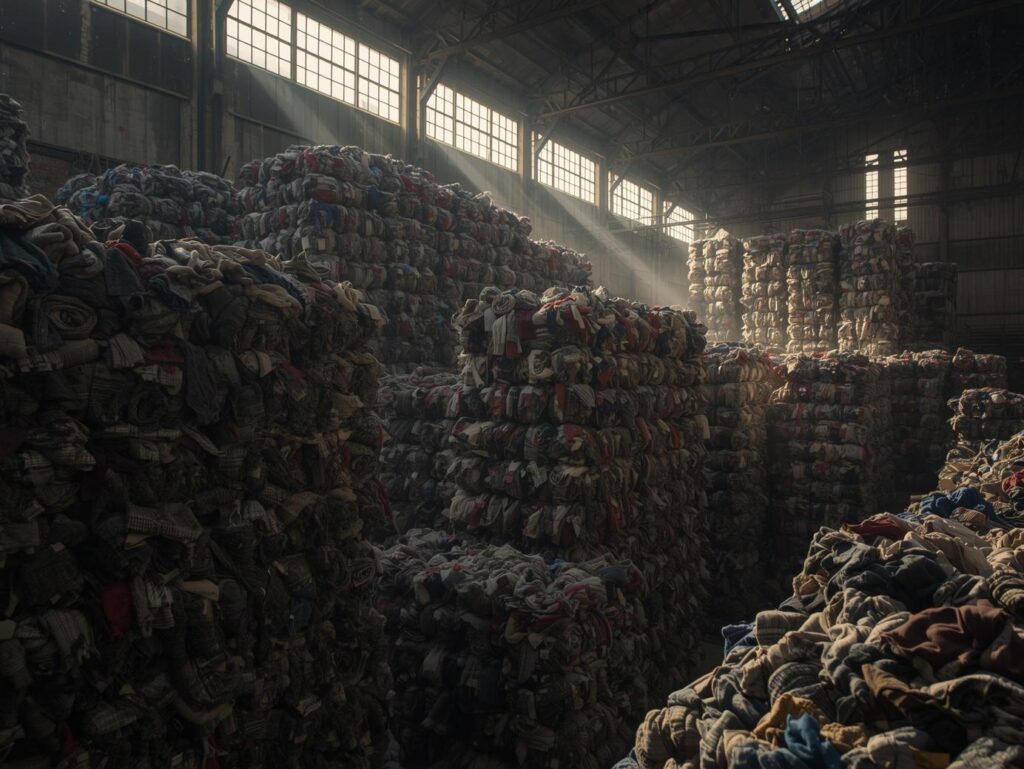
The Textile Rag House: Selling Bulk Used Clothing and Fabrics
The problem with bulk textiles is the sheer volume. You can fill a van with clothes in twenty minutes, but if you try to sell them one by one online, you’ll spend your whole life taking pictures and answering questions for a few dollars. It is exhausting to see hundreds of pounds of material sitting in your shop taking up space while you wait for a “donation” center to decide if they feel like taking them. You feel like the “soft” part of your haul is just a burden that eats your time and crowds out the high-value metal.
The solution is to find a “Textile Grader” or a “Rag House.” These are industrial-scale buyers who treat fabric exactly like a scrap yard treats iron. They weigh your load on a platform scale and pay you a flat rate per pound. They then sort that material for three different markets: vintage resale, export to developing nations, and industrial wiping rags. When you find a reliable rag house, you turn every closet in an estate into a predictable paycheck.
What is a Rag House?
A rag house is a processing plant for used textiles. In the trade, they are listed under NAICS 423930 (Recyclable Material Merchant Wholesalers). These companies are the lungs of the global clothing industry. They take in the millions of pounds of “overstock” that thrift stores can’t sell and sort it with incredible speed.
When you bring a load to a rag house, they aren’t looking for fashion. They are looking for “Tiers of Value.”
- Grade A (Resale/Export): This is clean, wearable clothing. The best stuff stays in the country for vintage shops, and the rest is baled and shipped overseas.
- Wiping Rags: This is where the “junk” goes. If a shirt is stained or torn, it gets the buttons and zippers cut off and is sliced into squares. These are sold to factories, mechanic shops, and painters as industrial wipes.
- Shoddy/Fiber: This is the bottom of the barrel. Scraps that are too small or worn to be rags are shredded into “shoddy.” This fiber is used for carpet padding, car insulation, and high-end paper manufacturing.
How to Find and Contact a Textile Buyer
You won’t find these guys next to the shopping mall. They are usually located in the warehouse districts near shipping ports or major rail lines. You want to search for “Textile Recyclers,” “Used Clothing Wholesalers,” or “Industrial Wiping Rag Manufacturers.”
When you reach out, tell them you are a “Route Collector” or a “Clean-out Specialist.” Ask them three things:
- What is your “In-Gate” price for mixed domestic “credential” clothing?
- Do you have a minimum weight (usually 500 to 1,000 lbs)?
- Do I need to have the material in bags or can it be loose?
A pro rag house will give you a “Mixed” price. If you’ve already sorted out the “White Cotton” (which is the high-value stuff for painters), tell them. They will often pay a premium for separated loads.
Starting a Textile Aggregation Business
If you want to stop hauling and start brokering, the textile business is one of the easiest niches to enter because the “input” material is often free. People are desperate to get rid of old clothes.
The Setup:
- The Collection: You can set up “Textile Drop Boxes” (with the proper permits) or offer a “Free Clothing Pickup” service in your town.
- The Space: You need a dry warehouse or a large garage. Moisture is the enemy of the textile trade. If clothing gets wet, it molds, and a rag house will reject the whole load as “garbage.”
- The Baler: This is the most important piece of gear. To move textiles profitably, you have to compress them into “Bales” (usually 100 to 1,000 lbs). A vertical baler, the same kind used for cardboard, is perfect for this. Baled clothing is much easier to stack and ship to the big graders.
- The Payout: You are looking for volume. If you collect the clothes for free and bale them, you can move tons of material a month. Even at $0.10 to $0.20 per pound, a 40,000-pound truckload is a $4,000 to $8,000 payday for material that most people were going to throw away.
The “Secret Sauce”: The White Cotton Premium
I want to give you a tip that will help you squeeze an extra 30% out of your textile loads. This is a trick the industrial rag houses use every day.
Did you know? Industrial painters and precision machinists only want white cotton rags. They can’t use colored fabrics because the dyes might bleed when they use solvents like lacquer thinner.
The Tip: When you are sorting through linens and clothes, keep a separate bin for “White Cotton.” This includes white t-shirts, white bedsheets, and white towels. Ensure there is no printing or heavy “silk-screening” on them.
When you call a wiping rag manufacturer, don’t just tell them you have “rags.” Tell them you have “Clean, Sorted White Cotton Knits.” They will pay a significantly higher price for this than they will for a mixed bag of colored sweaters and jeans. It turns a “waste” product into a “specialty” product.
Integrity and the Trade
In the textile business, cleanliness is your reputation. If you try to hide wet, moldy, or “heavy” (oil-soaked) clothes in the middle of a bale, the grader will find it. Once they see you are trying to “weight” a load with trash or wet fabric, they will stop taking your calls.
Always play it straight. If a bag of clothes was left in a damp basement and smells like mildew, don’t mix it with your clean stock. The secondary market for fabric depends on the material being “sanitary” for the next person who handles it.
Check your local laws regarding “Solicitation” and “Collection Bins.” Many towns have strict rules about where you can place clothing drop boxes and who is allowed to collect them. Stay legal, keep your material dry, and you’ll build a steady business that “cleans up” in more ways than one.
***
Ulysses’ Safety Reminder: When you are handling bulk textiles, you are dealing with a fire hazard. Dust from fabric is incredibly flammable. Keep your warehouse clean, and never smoke near your bales. Also, use a “Back Support” belt. A bag of clothes doesn’t look heavy until you’ve lifted fifty of them in an hour. Your back is your most important tool – don’t break it on a “soft” load. Stay safe out there.
Specialist Scrap Buyers
Knowledge is the only thing that doesn’t weigh down the truck.
- Gold and Silver Refiners: Skip the pawn shops and jewelry stores to sell directly to the industrial furnaces for high-percentage payouts.
- Plastic Polymer Brokers: Turn the “waste” casings from appliances into industrial feedstock like ABS and HDPE.
- Textile Rag Houses: Move bulk clothing and linens by the ton for export, vintage resale, or industrial wiping rags.
- Automotive Core Buyers: Stop selling starters and alternators for scrap weight and start selling them as rebuildable units.
- E-Waste Motherboard Specialists: Move beyond “shred” prices by grading circuit boards based on their gold and precious metal content.
- Lead-Acid Battery Wholesalers: Aggregate your car and industrial batteries into pallets to get the top-tier lead prices.
- Catalytic Converter Specialists: Use serial numbers and PGM assays to get paid for the platinum, palladium, and rhodium inside the shell.
- Cardboard and Paper Pulp Brokers: Manage high-volume fiber by baling cardboard to “Mill-Spec” standards for a steady paycheck.
- Used Oil and Chemical Recovery Firms: Turn a messy liability into “liquid gold” by selling bulk fluids for re-refining.
- Pallet Brokers: Turn used wood into a high-velocity business by sourcing and repairing GMA-standard shipping pallets.
- Glass Cullet Buyers: Sort glass by color and purity to supply the bottling and fiberglass industries.
- Appliance Parts Liquidators: Harvest the control boards and motors from “white goods” to sell to the repair industry.
- Specialty Non-Ferrous Smelters: Identify and sell high-temp “super-alloys” like Titanium, Inconel, and Monel by their specific chemistry.
- Used Tire Casing Buyers: Grade your used rubber to find “buildable” carcasses for the retread industry.
- Drum and Tote Reconditioners: Sell your clean 55-gallon barrels and IBC tanks to firms that wash and re-certify them for reuse.