
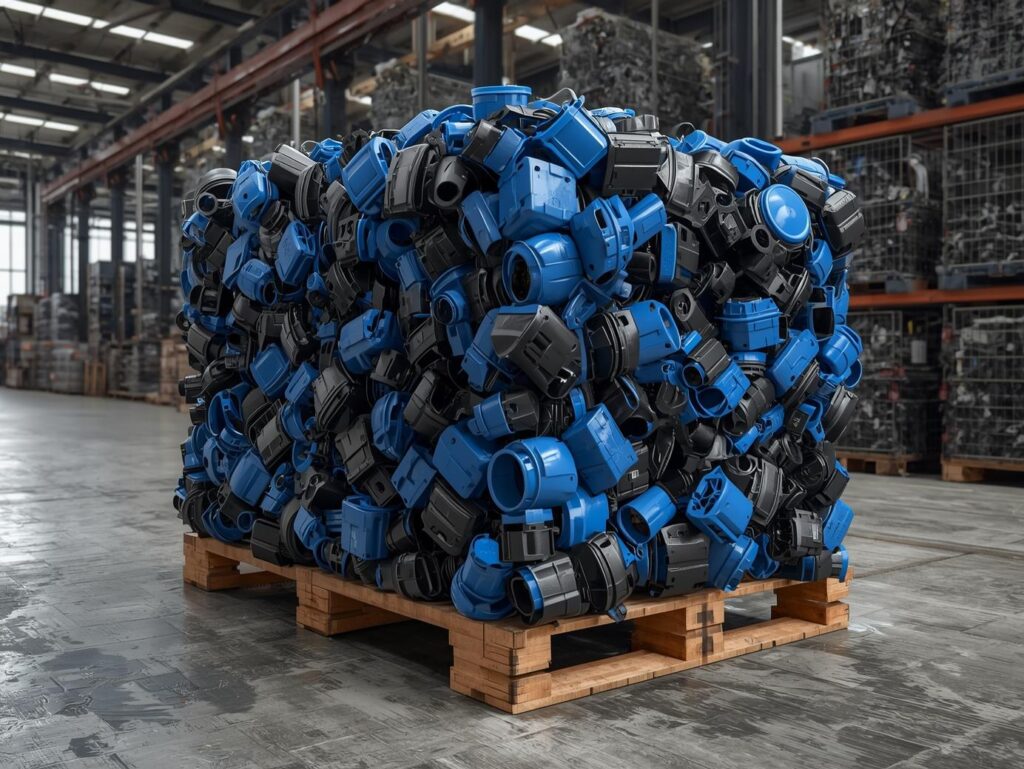
Finding a Plastic Polymer Broker: Getting Paid for Appliance Casing
The biggest problem in the modern secondary market is the “waste-to-weight” ratio. You might spend an hour picking up ten vacuum cleaners, but after you pull the four pounds of copper and the small motors, you are left with a hundred pounds of plastic that you have to haul to the landfill. It feels like you are spinning your wheels, doing all the heavy lifting for a tiny payout while the bulk of the “material” you found ends up costing you money in disposal fees. It’s a gap in the business that keeps a lot of good people from scaling up their operations.
The solution is to tap into the world of “Polymer Brokering.” There are specialized companies that don’t want metal at all – they only want high-grade, sorted plastics like ABS, HDPE, and Polycarbonate. These companies buy in bulk to create “regrind” or “pellets” for manufacturers. By learning how to identify, sort, and clean your plastic scrap, you can turn a “waste expense” into a “secondary revenue stream.” You stop being a guy who dumps trash and start being a supplier of industrial feedstock.
What is a Polymer Broker?
A plastic polymer broker is a wholesaler who acts as the bridge between the scrapper and the plastic manufacturer. In the trade, these businesses often fall under NAICS 423930 (Recyclable Material Merchant Wholesalers). They don’t just take “plastic”; they take specific chemical families of plastic.
In the world of appliances, you are mostly dealing with two high-value types:
- ABS (Acrylonitrile Butadiene Styrene): This is the tough, shiny plastic used in vacuum cleaner bodies, power tool housings, and computer monitors. It is valued because it is incredibly impact-resistant and holds its shape well when remelted.
- HDPE (High-Density Polyethylene): This is the “waxy” feeling plastic used in detergent bottles, fuel tanks, and some appliance bases. It is the workhorse of the recycling world.
A broker will take this material, put it through a massive industrial grinder, and sell the resulting “chips” to companies that make everything from new car parts to plastic lumber.
How to Identify and Sort Plastic for a Buyer
A polymer broker will not talk to you if you bring them a “mixed bag.” If you have a bin full of different types of plastic, it is worthless to them because different polymers don’t mix when they melt – it’s like trying to mix oil and water.
The Identification Process:
Look for the “Recycling Triangle” usually stamped on the inside of the casing.
- Number 2: HDPE. Very common and easy to sell.
- Number 7 (or marked ABS): This is your high-value appliance plastic.
- PC: Polycarbonate. Found in clear “bulletproof” style plastics or high-end electronics.
To get paid, you must “clean” the material. This means removing every single screw, every sticker, and every bit of rubber or foam. A broker wants “Pure Polymer.” If your ABS casing has a steel bracket still screwed into it, they will reject the whole load. It takes time, but when you consider you are being paid for something you used to pay to dump, the math starts to make sense.
Starting a Plastic Aggregation Business
If you want to move beyond just selling your own scrap and start buying from other scrappers, you can set up a “Plastic Aggregator” shop.
The Setup:
- The Space: You need a dry area to store sorted bins. Plastic is light but it takes up a lot of room (volume).
- The Equipment: You don’t need a million-dollar grinder to start. You need a way to “densify” the load. Many small-scale brokers use a “Vertical Baler” – the same kind grocery stores use for cardboard – to crush the plastic into 500-pound cubes. This makes it easier to ship.
- The Connections: Use trade sites like PlasticsNews or look for “Plastic Reclaimers” in your region. These buyers usually want a “full truckload” (around 40,000 lbs), but many smaller brokers will buy “Gaylord Boxes” (large pallet-sized cardboard boxes) of sorted, un-crushed plastic if you are local.
- The Payout: You are looking for a “spread.” You might accept plastic for free from other scrappers (saving them the dump fee) and then sell the sorted, baled material to the broker for $0.10 to $0.25 per pound. It sounds small, but when you are moving tons of material, it adds up to a steady, low-overhead business.
The “Secret Sauce”: The “Snap and Sink” Field Test
I want to give you a tip for those times when the plastic doesn’t have a recycling mark on it. This happens a lot with older appliances or high-end industrial gear.
Did you know? Different plastics have different “specific gravities,” meaning some float and some sink. You can use this to tell high-value ABS from cheap Polypropylene.
The Tip: If you aren’t sure what you have, try the Snap Test first. ABS is “brittle-tough.” If you try to bend a thin piece, it will resist, and then it will “snap” with a sharp, loud crack. Cheap plastic (like a storage bin) will just turn white and bend.
If it snaps, try the Sink Test. Drop a small piece into a bucket of plain water.
- If it floats: It is likely Polypropylene or Polyethylene (lower value).
- If it sinks: It is a “dense” polymer like ABS, PC, or PVC. These “sinkers” are almost always the ones the brokers want.
Integrity and the Long Game
In the plastic business, cleanliness is the only thing that matters. If you send a bale of HDPE to a broker and there is a single PVC pipe hidden in the middle, you can ruin a whole batch of “melt” at the factory. That is how you get blacklisted.
Play it straight. If you aren’t 100% sure what a piece of plastic is, put it in the “Mixed” bin or don’t sell it to the specialist. Your value to the broker is your ability to guarantee a “pure” stream of material. Once they know your loads are clean, they will offer you better rates and faster pickups.
Always check your local environmental laws. While recycling plastic is a “green” business, some states have rules about “Outdoor Storage” because they don’t want plastic breaking down in the sun or blowing away. Keep your yard tight and your bins covered.
***
Ulysses’ Safety Reminder: When you are processing plastic, watch out for “Dust and Fumes.” If you decide to get a small grinder or “shredder,” you must wear a high-quality respirator. Plastic dust is not something you want in your lungs. And never – and I mean never – try to identify plastic by burning it and smelling the smoke. Some plastics, like PVC, release “hydrochloric acid” gas when burned, which can damage your lungs instantly. Stick to the snap and sink tests. Stay safe out there.
Specialist Scrap Buyers
Knowledge is the only thing that doesn’t weigh down the truck.
- Gold and Silver Refiners: Skip the pawn shops and jewelry stores to sell directly to the industrial furnaces for high-percentage payouts.
- Plastic Polymer Brokers: Turn the “waste” casings from appliances into industrial feedstock like ABS and HDPE.
- Textile Rag Houses: Move bulk clothing and linens by the ton for export, vintage resale, or industrial wiping rags.
- Automotive Core Buyers: Stop selling starters and alternators for scrap weight and start selling them as rebuildable units.
- E-Waste Motherboard Specialists: Move beyond “shred” prices by grading circuit boards based on their gold and precious metal content.
- Lead-Acid Battery Wholesalers: Aggregate your car and industrial batteries into pallets to get the top-tier lead prices.
- Catalytic Converter Specialists: Use serial numbers and PGM assays to get paid for the platinum, palladium, and rhodium inside the shell.
- Cardboard and Paper Pulp Brokers: Manage high-volume fiber by baling cardboard to “Mill-Spec” standards for a steady paycheck.
- Used Oil and Chemical Recovery Firms: Turn a messy liability into “liquid gold” by selling bulk fluids for re-refining.
- Pallet Brokers: Turn used wood into a high-velocity business by sourcing and repairing GMA-standard shipping pallets.
- Glass Cullet Buyers: Sort glass by color and purity to supply the bottling and fiberglass industries.
- Appliance Parts Liquidators: Harvest the control boards and motors from “white goods” to sell to the repair industry.
- Specialty Non-Ferrous Smelters: Identify and sell high-temp “super-alloys” like Titanium, Inconel, and Monel by their specific chemistry.
- Used Tire Casing Buyers: Grade your used rubber to find “buildable” carcasses for the retread industry.
- Drum and Tote Reconditioners: Sell your clean 55-gallon barrels and IBC tanks to firms that wash and re-certify them for reuse.