
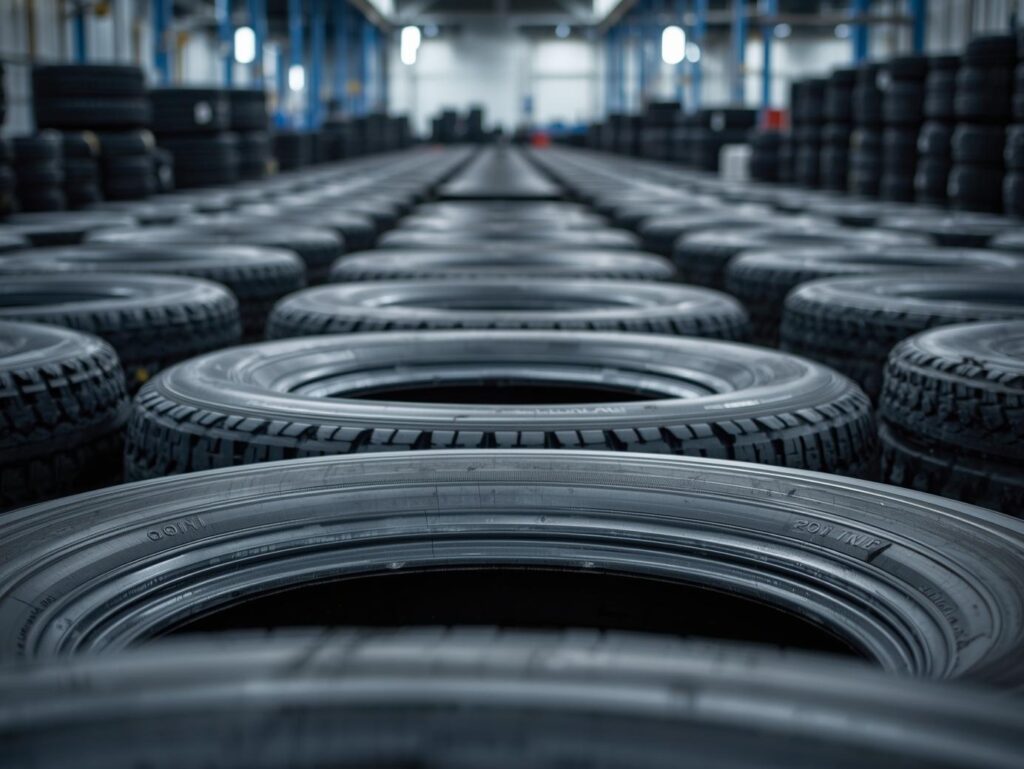
Used Tire Casing Buyers: Turning Disposal Fees into Cash Payouts
Today we’re going to talk about the “black gold” that most folks treat like a bill they have to pay. I’m talking about used tires. If you’ve been scrapping cars or doing shop clean-outs, you know that tires are usually the biggest headache in the load.
Most people in this trade see a tire and immediately think about the five-dollar disposal fee they’ll have to pay at the landfill. They see a pile of rubber as a liability that eats their profit and takes up space in the truck. If you are just paying to dump them, you are missing out on a massive secondary market that keeps the global trucking and construction industries moving. To the master of the yard, a tire isn’t “waste” – it is a “Casing.” There is a world of buyers called Tire Casing Wholesalers who want that rubber, and they will pay you for every “buildable” carcass you bring them.
The problem with tires is the sheer cost of getting rid of them. As those stacks of rubber continue growing behind your shop so does the cost of getting rid of them. Old tires are a messy, space-consuming part of the business that makes a lot of people want to avoid automotive scrap altogether.
The solution is to find a Used Tire Casing Buyer or a “Retread Supplier.” These are specialized wholesalers who buy “carcasses” (used tires with good structure) and sell them to retreading plants. A retreader takes that casing, grinds off the old tread, and applies a brand-new layer of rubber through a process called “vulcanization.” By learning how to grade a casing and finding a local wholesaler, you can turn a “disposal fee” into a “per-unit” payout. You stop being a guy with a trash problem and start being a supplier to the retread industry.
What is a Tire Casing Buyer?
In the business, these buyers are known as “Casing Brokers” or “Carcass Wholesalers.” They fall under NAICS 423130 (Tire and Tube Merchant Wholesalers). Their job is to find high-quality used tires that are “buildable.” They provide the raw material for companies like Bandag or Bridgestone to create retreaded tires for semi-trucks, buses, and heavy machinery.
A casing buyer isn’t looking for “used tires” to put on a car today. They are looking for the “skeleton” of the tire. They sort their inventory into very specific grades:
- Grade A Casing: These are premium carcasses with no repairs, no sidewall damage, and a young “DOT” (Date of Manufacture) code. These carry the highest payout.
- Grade B Casing: These might have a single “nail hole” repair in the tread area but are otherwise structurally sound.
- Junk/Scrap: These are tires with “cords” showing, sidewall cracks (weather checking), or “bead” damage. These still have a disposal fee, but a pro knows how to minimize these in the load.
How to Find and Work with a Casing Buyer
You won’t find a casing buyer at a retail tire shop. You need to look in industrial areas for “Casing Wholesalers” or “Retread Plants.” Look for names like Liberty Tire Recycling (who handle both scrap and casings) or independent brokers who supply local truck-tire recappers.
When you call a wholesaler, don’t ask if they “buy used tires.” Ask for their “Current Buy-Back Sheet for Truck and Passenger Casings.” To get the top dollar, you need to understand the “In-Gate” requirements:
- Cleanliness: They don’t want tires full of water, mud, or “fix-a-flat” slime. A clean casing is easier to inspect.
- DOT Limits: Many retreaders will not touch a tire that is more than five or six years old. You need to know how to read the “Date Code” on the sidewall.
- The “Boutique” Sizes: Large truck tires (22.5 and 24.5 sizes) are the “money” tires in this trade. A single good truck casing can be worth $30 to $60, while a passenger car casing might only be $2 to $5.
Starting a Tire Casing Collection Business
If you want to build a high-volume route, the casing business is a “service-based” model. You aren’t just a scrapper; you are an environmental service provider.
The Setup:
- The Route: Focus on “Used Tire Shops” and small auto repair garages. These places are overwhelmed with tires. Offer to pick up their “scrap” for a lower fee than the big waste companies charge. You get paid a “service fee” to take the tires away.
- The Equipment: You need a high-cube box truck or a large trailer with high sides. Tires are light but they take up massive volume.
- The Sorting Yard: You need a dry, flat area to “grade” your tires. You sort the “Casings” (the money) from the “Scrap” (the cost).
- The Payout: This is a “double-dip” business. You collect $2.00 per tire from the shop to haul them away. Then, you sort out the 20% that are good “casings” and sell them to the broker for $5.00 to $40.00 each. The remaining scrap tires are then taken to a processor where you pay the disposal fee using the money you already collected.
The “Secret Sauce”: The “Inner Liner” Inspection Tip
I want to give you a tip that will help you tell a “Money Casing” from a “Scrap Tire” in ten seconds. This is what the pro graders look for before they ever check the tread.
Did you know? The most important part of a casing isn’t the outside – it’s the “Inner Liner.” If a tire was ever driven while it was flat, the internal structure is “chewed up.” This makes the casing dangerous and un-buildable, even if the outside looks brand new.
The Tip: Stick your hand inside the tire and feel the “Inner Liner” (the smooth rubber on the inside).
- If you feel “rubber dust” or “crumbs” inside, the tire is junk. That is the internal structure disintegrating.
- Look for a “Circumferential Ring” on the inside sidewall that looks like a dark, worn line. That is a “run-flat” mark.
- The Pro Move: Use a high-powered flashlight to look for “Plugs.” If you see a repair that is too close to the sidewall, the casing is rejected. By doing a “blind feel” of the inner liner, you can grade a tire in the dark and ensure you are only hauling the units that will get you paid.
Integrity and the Trade
In the casing business, your reputation is built on “Acceptance Rates.” If you send a trailer-load of 200 tires to a wholesaler and they have to reject 100 of them as “junk,” you will lose your shirt on the freight costs and the buyer will stop taking your calls.
Play it straight. Don’t try to hide a “weather-checked” tire in the middle of a stack. If you aren’t sure if a casing is buildable, mark it as “Grade C” or put it in the scrap pile. Being the person who provides a “High Acceptance” load is how you get the “Preferred Supplier” rates.
Always check your local and state environmental laws. Storing tires is heavily regulated because they are a fire hazard and a breeding ground for mosquitoes. You will likely need a “Waste Tire Hauler” permit and a specific storage permit if you keep more than a few hundred on your property. Stay legal, keep your stacks covered, and follow the manifest rules.
***
Ulysses’ Safety Reminder: Tires are heavy and they “rebound.” If a stack of tires falls, it can pin you or break a limb before you can move. Also, never burn tires. The smoke is highly toxic and the oil that runs out of a burning tire can contaminate the groundwater for miles. Always wear gloves to protect against “wire pokes” from steel-belted radials, and use proper lifting techniques. A bad back is a high price to pay for a load of rubber. Stay sharp and stay safe.
Specialist Scrap Buyers
Knowledge is the only thing that doesn’t weigh down the truck.
- Gold and Silver Refiners: Skip the pawn shops and jewelry stores to sell directly to the industrial furnaces for high-percentage payouts.
- Plastic Polymer Brokers: Turn the “waste” casings from appliances into industrial feedstock like ABS and HDPE.
- Textile Rag Houses: Move bulk clothing and linens by the ton for export, vintage resale, or industrial wiping rags.
- Automotive Core Buyers: Stop selling starters and alternators for scrap weight and start selling them as rebuildable units.
- E-Waste Motherboard Specialists: Move beyond “shred” prices by grading circuit boards based on their gold and precious metal content.
- Lead-Acid Battery Wholesalers: Aggregate your car and industrial batteries into pallets to get the top-tier lead prices.
- Catalytic Converter Specialists: Use serial numbers and PGM assays to get paid for the platinum, palladium, and rhodium inside the shell.
- Cardboard and Paper Pulp Brokers: Manage high-volume fiber by baling cardboard to “Mill-Spec” standards for a steady paycheck.
- Used Oil and Chemical Recovery Firms: Turn a messy liability into “liquid gold” by selling bulk fluids for re-refining.
- Pallet Brokers: Turn used wood into a high-velocity business by sourcing and repairing GMA-standard shipping pallets.
- Glass Cullet Buyers: Sort glass by color and purity to supply the bottling and fiberglass industries.
- Appliance Parts Liquidators: Harvest the control boards and motors from “white goods” to sell to the repair industry.
- Specialty Non-Ferrous Smelters: Identify and sell high-temp “super-alloys” like Titanium, Inconel, and Monel by their specific chemistry.
- Used Tire Casing Buyers: Grade your used rubber to find “buildable” carcasses for the retread industry.
- Drum and Tote Reconditioners: Sell your clean 55-gallon barrels and IBC tanks to firms that wash and re-certify them for reuse.