
Drum and Tote Reconditioners: Turning Industrial Containers into Profit
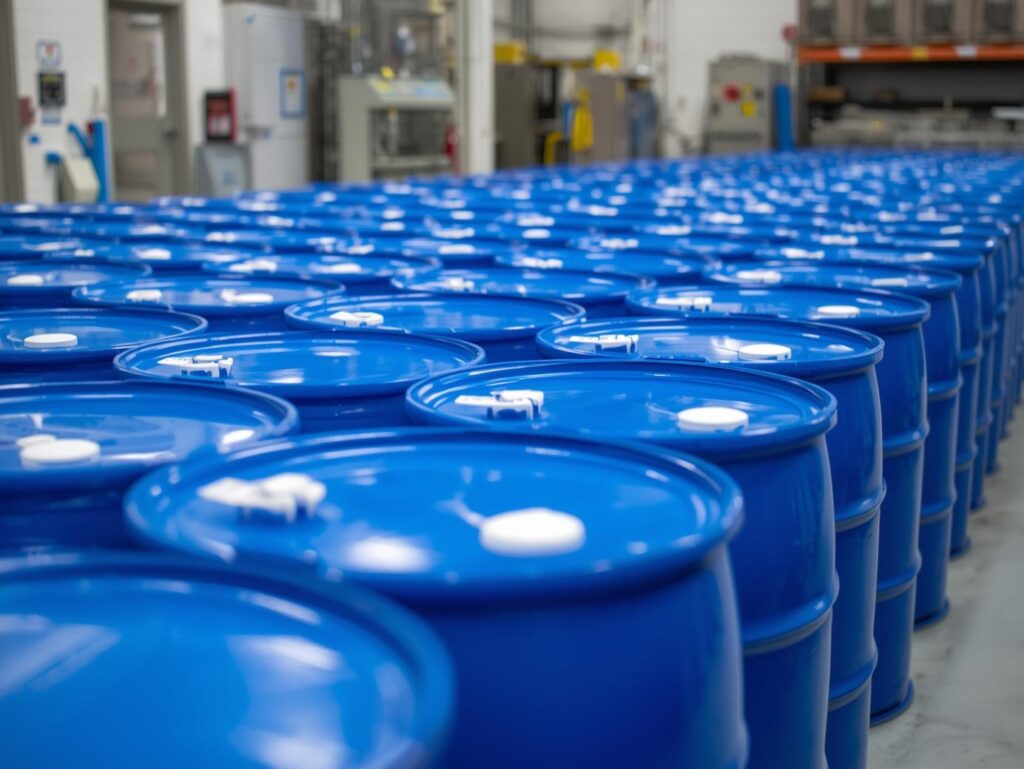
I’ve saved one of the bulkiest profit-makers for last. If you’ve ever cleared out a car wash, a food processing plant, or a chemical warehouse, you’ve seen them: the big 55-gallon blue plastic drums and those 275-gallon tanks in steel cages. In the trade, we call those tanks “IBC Totes” (Intermediate Bulk Containers).
Most folks in the business look at these as a massive waste of space. They are too light to be worth much in a plastic bin and too big to fit many in a truck. If you’re just throwing them in a dumpster, you are paying a waste company to haul away a specialized piece of industrial equipment. To the master of the yard, these aren’t “trash” – they are reusable assets. There is a world of buyers called Drum and Tote Reconditioners who want those containers, and they will pay you a premium for every “clean” unit you find.
The biggest problem with industrial containers is the “residue” and the bulk. You see fifty blue drums sitting behind a shop and you know there is money there, but you don’t want to deal with the liquid left inside or the space they take up in your yard.
The solution is to find a Drum and Tote Reconditioner or a “Container Service” firm. These are specialized companies that don’t just “recycle” the plastic; they wash, test, and re-certify the containers for reuse. A reconditioner can take a used drum, put it through an industrial wash-line, and sell it back to a factory for a fraction of the cost of a new one. By learning how to identify “food-grade” containers and finding a local buyer, you turn a bulky nuisance into a high-margin paycheck. You stop being a junk hauler and start being a supplier to the industrial packaging industry.
What is a Drum and Tote Reconditioner?
In the business, these buyers are known as “Reconditioners” or “Re-cappers.” They fall under NAICS 326199 (All Other Plastics Product Manufacturing) or NAICS 332439 (Other Metal Container Manufacturing). Their job is to keep the “closed-loop” system moving for liquid shipping.
A reconditioner usually looks for three primary items:
- 55-Gallon Plastic Drums (HDPE): These are the blue or white barrels. They want “Tight-Head” (two small bungs) or “Open-Head” (removable lid) styles.
- IBC Totes (275 or 330 Gallon): These are the plastic tanks inside a galvanized steel cage. These are the “money” items in the trade because they are expensive to buy new.
- Steel Drums: While less common than plastic now, clean steel drums are still highly valued for reconditioning into industrial fuel or chemical containers.
How to Find and Work with a Container Buyer
You won’t find these buyers at the local dump. You need to look for “Industrial Container Services” or “Reconditioned Drum Suppliers.” Companies like Schütz or Mauser Packaging operate worldwide, but there are local, independent reconditioners in every industrial hub who buy from independent scrappers.
When you call a reconditioner, don’t ask if they “take barrels.” Ask for their “Current Buy-Back Rate for Food-Grade Totes and HDPE Drums.” To get the top dollar, you need to understand the “In-Gate” requirements:
- The “Drip Dry” Rule: A reconditioner will not accept a container that is full of liquid. It must be “RCRA Empty,” which means no more than one inch of residue left in the bottom.
- Labeling: Do not peel off the original labels. The buyer needs to know exactly what was inside the container to ensure they can wash it safely.
- Food-Grade Premium: Containers that held food-grade materials (like corn syrup, vinegar, or vegetable oil) are worth significantly more because they can be reused in more industries.
Starting a Container Collection Route
If you want to build a business that provides a steady stream of “bulky” profit, the container trade is all about logistics.
The Setup:
- The Route: Focus on local car washes, breweries, food manufacturers, and landscape companies. These places use chemicals and ingredients in bulk and often have piles of empty drums and totes they want gone. Offer a “Regular Pickup Service.” You save them the hassle of disposal, and you get the inventory for zero cost.
- The Equipment: You need a trailer with high “Stake Sides” or a box truck. Since these are light but bulky, you need to be able to stack them safely. A set of heavy-duty ratchet straps is essential.
- The Storage: You need a dry, flat area. If you store IBC totes outside, the sun will eventually “UV-degrade” the plastic, making it brittle and worthless. Keep your high-value totes under a tarp or in a warehouse.
- The Payout: This is a “per-unit” game. You collect for free, and you sell a clean IBC tote for $40 to $80. A clean blue drum might be $5 to $15. When you move 50 units in a weekend, that is a professional payday for material that is easy to handle.
The “Secret Sauce”: The “Bung and Valve” Integrity Tip
I want to give you a tip that will help you ensure your buyer takes every unit you bring them. This is the difference between a “Core” and a “Scrap” container.
Did you know? The most expensive part of an IBC tote to replace isn’t the tank – it’s the “Valve” and the “Cage.” If the valve is broken or the cage is rusted through, the tote loses 80% of its value.
The Tip: Before you load a tote, check the Bottom Valve.
- Open and close the handle. It should move smoothly. If it’s snapped off, that tank is likely just “plastic scrap” weight.
- The “Bung” Move: On 55-gallon drums, ensure the “Bungs” (the threaded caps) are still there. If a drum is left open to the rain, the inside gets contaminated with “bio-growth” (algae), which makes it much harder to clean. A reconditioner will pay a premium for “capped and dry” drums.
Integrity and Environmental Safety
In the container business, your reputation is built on “Transparency.” If a drum held a toxic pesticide, you must tell the buyer. Never try to “rinse out” a hazardous chemical yourself and sell it as food-grade. The reconditioner’s chemical tests will find the trace elements, and you will be liable for the contamination of their entire wash-line.
Play it straight. If you find a “Mystery Drum” with no label, do not take it. It isn’t worth the risk to your health or your business. Only handle containers with clear labels and known histories. Being the person who provides “Legitimate, Labeled Cores” is how you build a long-term partnership with a buyer.
Always check your local environmental laws and DOT regulations. Hauling “Empty” containers that previously held hazardous materials still requires you to follow specific labeling rules. Stay legal, keep your manifest, and follow the safety guidelines.
***
Ulysses’ Safety Reminder: Drums and totes are deceptively heavy when they have even a few gallons of liquid in them. A 55-gallon drum of oil weighs over 400 pounds – don’t try to manhandle it alone. Also, be careful of “Vapor Pressure.” If a drum has been sitting in the sun, the fumes inside can build up pressure. When you unscrew a bung, do it slowly and keep your face away. Always wear eye protection and gloves. Stay sharp and stay safe.
Specialist Scrap Buyers
Knowledge is the only thing that doesn’t weigh down the truck.
- Gold and Silver Refiners: Skip the pawn shops and jewelry stores to sell directly to the industrial furnaces for high-percentage payouts.
- Plastic Polymer Brokers: Turn the “waste” casings from appliances into industrial feedstock like ABS and HDPE.
- Textile Rag Houses: Move bulk clothing and linens by the ton for export, vintage resale, or industrial wiping rags.
- Automotive Core Buyers: Stop selling starters and alternators for scrap weight and start selling them as rebuildable units.
- E-Waste Motherboard Specialists: Move beyond “shred” prices by grading circuit boards based on their gold and precious metal content.
- Lead-Acid Battery Wholesalers: Aggregate your car and industrial batteries into pallets to get the top-tier lead prices.
- Catalytic Converter Specialists: Use serial numbers and PGM assays to get paid for the platinum, palladium, and rhodium inside the shell.
- Cardboard and Paper Pulp Brokers: Manage high-volume fiber by baling cardboard to “Mill-Spec” standards for a steady paycheck.
- Used Oil and Chemical Recovery Firms: Turn a messy liability into “liquid gold” by selling bulk fluids for re-refining.
- Pallet Brokers: Turn used wood into a high-velocity business by sourcing and repairing GMA-standard shipping pallets.
- Glass Cullet Buyers: Sort glass by color and purity to supply the bottling and fiberglass industries.
- Appliance Parts Liquidators: Harvest the control boards and motors from “white goods” to sell to the repair industry.
- Specialty Non-Ferrous Smelters: Identify and sell high-temp “super-alloys” like Titanium, Inconel, and Monel by their specific chemistry.
- Used Tire Casing Buyers: Grade your used rubber to find “buildable” carcasses for the retread industry.
- Drum and Tote Reconditioners: Sell your clean 55-gallon barrels and IBC tanks to firms that wash and re-certify them for reuse.