
Identifying Silver in the Home: How to Spot the Real Weight
Most people looking to start scrapping silver make a massive mistake: they look for “shiny.” They walk into an estate sale or look through a bin of kitchenware, and they grab anything that glitters. They end up with a trunk full of “Silver Plate,” which is just a thin skin of silver over a base metal like copper or zinc. In the yard, that stuff is worth almost nothing compared to the real deal.
The problem is that real silver – what we call “Sterling” – often looks like junk. Because it reacts with the air, a piece of silver that’s been sitting in a drawer for thirty years will be black, dull, and ugly. You’re agitated because you see professional buyers walking away with heavy bags of metal while you’re stuck looking at a pile of “EPNS” (Electro-Plated Nickel Silver) that isn’t worth the gas it took to get there.
The solution is to stop looking at the color and start looking at the “marks.” You need to understand the code that silversmiths and manufacturers have used for centuries to identify the purity of their metal. Once you can read the “secret language” of silver, you’ll be able to spot a fortune in a pile of blackened spoons.
The Kitchen Drawer: Sterling vs. Silver Plate
The biggest source of silver in the secondary market is flatware – spoons, forks, and knives. But you have to be careful here.
Most of the “silver” you’ll find is silver-plated. This was a process invented in the mid-1800s to make cheap metal look expensive. It’s a thin layer of silver, often just microns thick, over a core of brass or nickel. To the trade, this is “junk.” It’s hard to refine and the yield is tiny.
Sterling silver, on the other hand, is 92.5% pure silver. The other 7.5% is usually copper, added to make the metal hard enough to use. If you find a sterling spoon, you’ve found real money.
How to tell the difference:
Turn the piece over. Look at the neck of the spoon or the back of the fork.
- The Good Stuff: Look for the word “Sterling” or the numbers “925.” This is the universal mark for sterling silver. Sometimes, on older pieces from Europe, you’ll see a “Lion Passant” (a lion walking with one paw up). That’s the British mark for sterling.
- The Junk: If you see “EPNS,” “EP,” “Silver Plate,” “Sheffield Plate,” or “A1,” put it back. That’s plated. “Nickel Silver” or “German Silver” are the biggest tricks in the business – there isn’t a single drop of silver in them. They’re just alloys of copper, nickel, and zinc made to look like silver.
The Jewelry Box: Reading the 925 Code
Jewelry is the next place you’ll find silver, but it’s often small and easy to lose. When you’re scrapping jewelry, you’re looking for the “fineness” mark.
In the United States, jewelry must be marked if it’s being sold as a precious metal. Look at the clasp of a necklace or the inside of a ring. You’re looking for “925.” Sometimes you’ll see “800” or “900.” This is “Coin Silver,” which was common in Europe and the early U.S. It’s still very valuable, just slightly less pure than sterling.
Why does it matter? Because in the trade, we buy by the “troy ounce.” If you have a handful of rings marked 925, you know exactly how much silver you have. If they aren’t marked, you have to treat them as “costume jewelry” until you can get them tested with acid or a spectrometer.
Industrial Silver: Hiding in the Walls
This is where my material science background comes in. If you want to find silver where no one else is looking, stop looking in the dining room and start looking in the utility room.
Because silver is the best electrical conductor, it was used for decades in high-end electrical components.
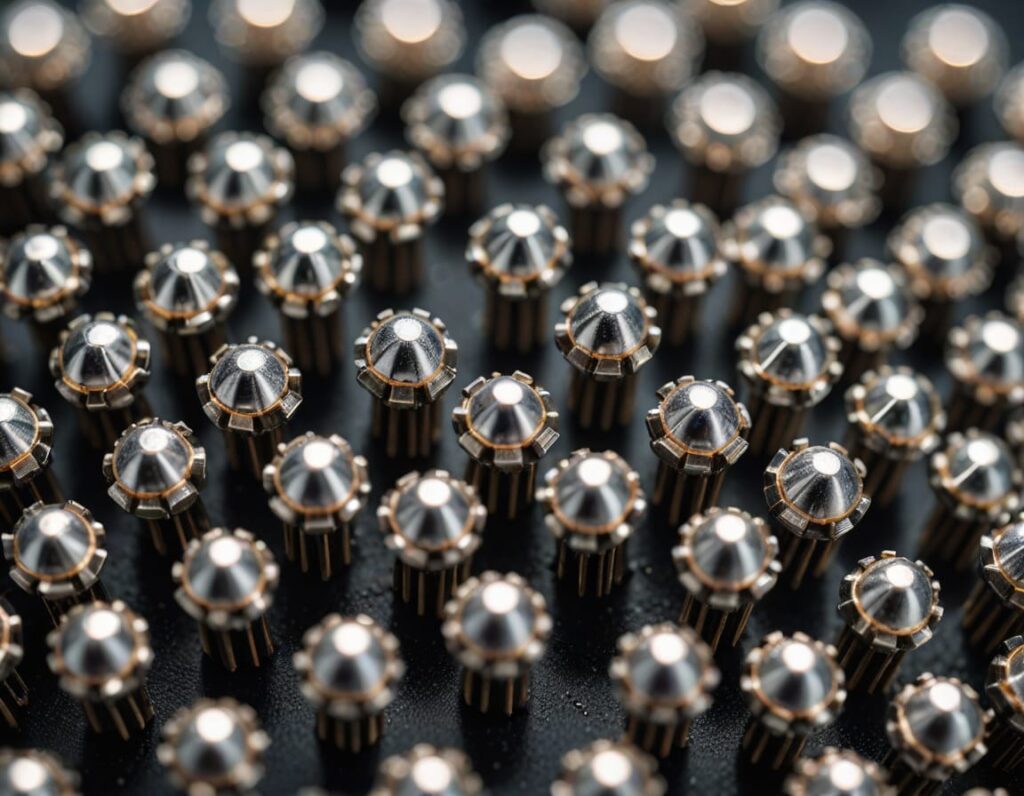
- Relay Switches: Inside old industrial machines, elevators, and even some heavy-duty HVAC units, there are “contact points.” When a switch flips, it creates a spark. To handle that spark without melting, engineers used “silver-cadmium” or “silver-tungsten” contacts. They look like little silver buttons brazed onto a piece of copper.
- Circuit Boards: In older high-end electronics (think 1970s and 80s medical or military gear), the “traces” on the boards weren’t just copper – they were silver-plated or even solid silver to ensure the signal never failed.
The “Secret Sauce”: The Ping Test
I want to give you a tool that works better than your eyes. It’s called the Ping Test.
Silver is a “sonorous” metal. Because of its density and the way its atoms are packed, it vibrates differently than base metals. If you have a coin or a small piece of flatware and you aren’t sure if it’s real, try this:
Balance the item on your fingertip and gently tap it with another piece of metal (like a key or a nickel).
- Real Silver: It will let out a long, high-pitched “ring” or “ping” that lingers for a second or two. It sounds like a tiny bell.
- Plated Junk: It will make a dull “thud” or a short, flat “clack.”
I’ve used this test at noisy auctions to identify silver coins in a jar from ten feet away. Once you hear the “silver ring,” you never forget it.
Integrity and the Secondary Market
When you’re out there picking through estates or buying scrap from neighbors, always be the person who plays it straight. If you see a piece that you know is a high-value antique – maybe a piece of Paul Revere silver or a rare Tiffany pattern – don’t just buy it for the melt value.
The “Master of the Yard” knows that some things are worth more as “art” than as “metal.” If you tell a seller, “This is worth more than its weight,” you might lose the scrap profit, but you’ve gained a partner for life. In the secondary market, your handshake is your bond.
Also, keep a logbook. Many states require you to record where you got your precious metals. It protects you and it protects the yard. If you can’t show where it came from, the police might think it’s “hot.” Play by the rules, and you’ll stay in business.
Ulysses’ Safety Reminder:
When you’re testing silver with acid – which is a common way to check purity – be extremely careful. That acid is usually nitric acid, and it will eat through your skin faster than it eats through the metal. Always wear eye protection and nitrile gloves. And if you’re pulling silver contacts out of old industrial switches, watch out for “cadmium.” It’s often alloyed with silver and the dust is toxic if you breathe it in while grinding or cutting. Stay smart, keep your workspace ventilated, and stay safe.
We’ve covered the “what” and the “where.” Next time, we’re going to talk about the “how” – the actual process of cleaning, weighing, and preparing your silver so you get the top dollar when you walk into the yard.