
Where to Sell Used Motor Oil and Industrial Chemicals: Turning Fluids into Profit
Let’s look at the “fluids” of the trade. Most scrappers see used motor oil, antifreeze, and industrial solvents as a massive headache. They are messy, they are heavy, and if you handle them wrong, they can cost you a fortune in environmental fines. But to the master of the yard, these aren’t waste – they are “liquid gold.” There is a whole industry of re-refiners and recovery firms that need this feedstock to stay in business.
The biggest problem with the “wet” side of the secondary market is the liability. When you drain the oil from a car or the coolant from an industrial chiller, you are left with a heavy drum of liquid that most people pay to get rid of. You feel the weight of the regulations and the risk of a spill hanging over your head all of the time. Afterall, it is a messy, complicated part of the business that makes a lot of good people want to just walk away and leave the fluids behind.
The solution is to connect with a “Used Oil Recovery Firm” or a “Solvent Re-refiner.” These are specialized companies that don’t see your used oil as waste; they see it as a raw material that is actually easier to refine than crude oil from the ground. By aggregating your fluids and following a simple “collection and manifest” system, you can turn a disposal cost into a steady, repeat payout. You stop being a guy with a leak problem and start being a supplier to the re-refining industry.
What is a Used Oil and Chemical Recovery Firm?
In the business, these buyers are known as “Environmental Service Providers” or “Re-refiners.” They are often classified under NAICS 423930 (Recyclable Material Merchant Wholesalers) or NAICS 562211 (Hazardous Waste Treatment and Disposal). Their job is to take contaminated fluids and put them through a process called “Fractional Distillation” to strip out the impurities.
A recovery firm usually looks for three main types of liquid scrap:
- Used Motor Oil (UMO): This is the most common. It is cleaned, filtered, and turned back into high-grade lubricating oil or industrial fuel.
- Used Antifreeze (Ethylene Glycol): This is distilled to remove the heavy metals and “bitterants,” then sold back to the automotive industry.
- Industrial Solvents: Things like parts-washer fluid, mineral spirits, and acetone. These are high-value because they can be recycled almost indefinitely.
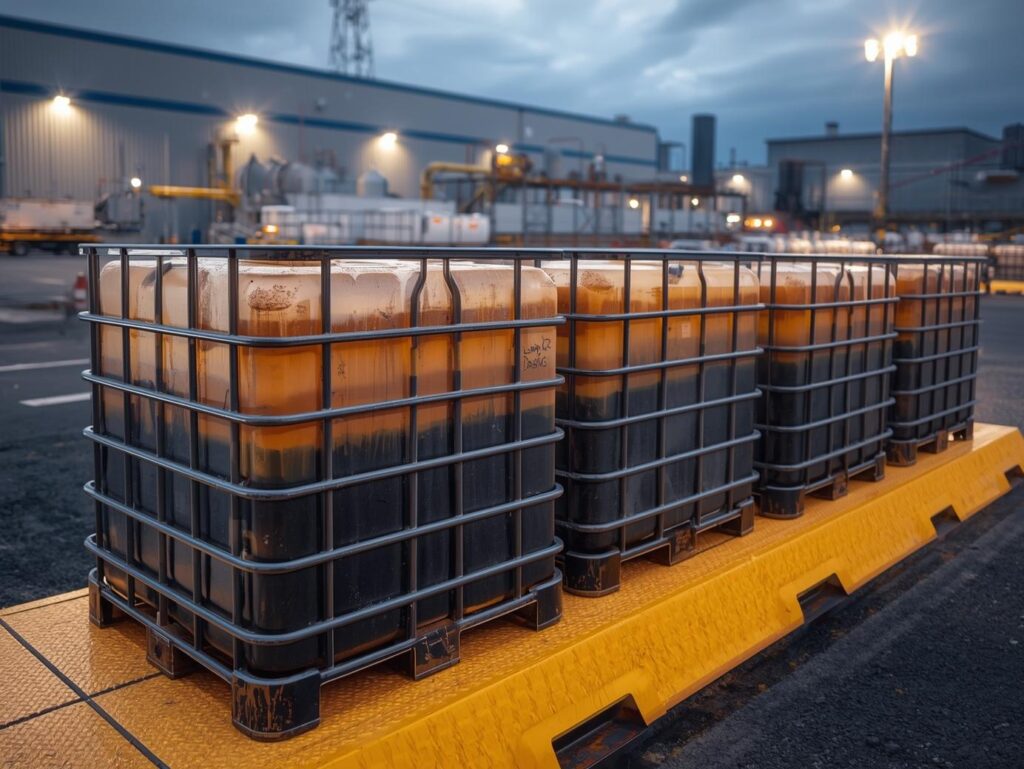
These buyers aren’t looking for a five-gallon bucket. They move in 55-gallon drums or 275-gallon “IBC Totes.” They buy by the gallon, and they pay based on the “purity” and the volume of the load.
How to Find and Work with a Fluid Buyer
You won’t find these buyers at a regular scrap yard. You need to look for “Oil Recycling Services” or “Environmental Resource Recovery” companies. Giants like Clean Harbors or Safety-Kleen operate nationwide, but there are local “independent” collectors in every state who aggregate for the big refineries.
When you call a recovery firm, don’t ask if they “take old oil.” Ask for their “Current Payout per Gallon for Bulk UMO.” You also need to ask about their “Stop Fees” and “Testing Requirements.”
To get the top dollar, you need to present your material like a professional:
- Zero Contamination: This is the golden rule. If you mix antifreeze into your oil, or if you throw a few gallons of gasoline into your oil drum, it becomes “hazardous waste.” A recovery firm will not pay you for contaminated oil – they will charge you a massive fee to dispose of it.
- Bulk Storage: Use 275-gallon IBC totes. These are the “industry standard” because they are easy to move with a pallet jack and easy for the vacuum truck to pump out.
- The Manifest: Keep a log of where the oil came from. A pro buyer wants to know they are buying from a legitimate scrapper, not someone who found a drum in the woods.
Starting a Fluid Collection Route
If you want to build a business that provides “passive” income, you can set up a collection route. You become the person who helps local garages and small factories stay compliant with the law.
The Setup:
- The Route: Visit small “mom-and-pop” mechanic shops, transmission shops, and local farms. These places generate small amounts of oil and often struggle to find a reliable way to get rid of it. Offer to place a 275-gallon tote at their shop and pick it up for free (or for a small fee) once a month.
- The Equipment: You need a truck with a liftgate and a specialized pump. A “diaphragm pump” is best because it can handle the thick sludge and grit found in the bottom of old oil tanks.
- The Warehouse: You need a “Secondary Containment” area. This is a concrete pad with a lip or a “berm” around it. If a tank leaks, the fluid must be caught by the containment, not the ground.
- The Payout: This is a “volume and arbitrage” game. You collect the oil for free (saving the shop a disposal fee) and then sell the full totes to the recovery firm for $0.20 to $0.50 per gallon. A full 275-gallon tote can be a $100 payday for a liquid that was given to you for free.
The “Secret Sauce”: The “Paper Towel” Purity Tip
I want to give you a tip that will save you from a “contamination fee” that could wipe out your whole month of profit.
Did you know? The biggest enemy of a used oil buyer is water. If your oil is more than 2% water, the refiner will penalize you. Water gets into the tanks through condensation or because a drum was left outside with the lid off.
The Tip: Before you call for a pickup, use the Paper Towel Test.
- Take a clean, white paper towel and put a single drop of the used oil on it.
- If the drop stays in a tight, dark circle, the oil is “dry” and good to go.
- If a clear “ring” of liquid spreads out from the dark center, you have water contamination.
- The Pro Move: Water is heavier than oil. It will always settle at the very bottom of the tank. Use a “thief” pump (a small hand pump with a long hose) to suck a few gallons off the very bottom of your tank before the buyer arrives. If it looks milky or clear, that’s your water. Pump it out and dispose of it separately so your “bulk” stays pure.
Integrity and Environmental Safety
In the fluid business, your word is everything. If you try to “water down” your oil to get a higher volume, or if you hide “hot” chemicals (like brake cleaner) in a drum of oil, you are risking your livelihood. The vacuum trucks take a sample before they pump. If they find “halogens” (chemicals with chlorine or fluorine), they will shut down the operation and report the load.
Always play it straight. If a drum of oil smells “funny” or like gasoline, mark it as “unknown” and keep it separate. The secondary market for oil only works if the refiner can trust the feedstock.
Always check your local and federal laws regarding “Spill Prevention, Control, and Countermeasure” (SPCC) plans. If you store more than 1,320 gallons of oil on your property, the EPA has very specific rules you must follow. Stay legal, keep your containment clean, and follow the manifest.
***
Ulysses’ Safety Reminder: Used fluids are toxic. Used motor oil is full of heavy metals and “carcinogens.” Always wear nitrile gloves and eye protection when pumping or pouring. Also, never – and I mean never – mix fluids in a closed container without knowing what they are. Mixing certain cleaners and oils can create “mustard gas” or cause an explosion. Keep your shop ventilated and keep your “Safety Data Sheets” (SDS) handy for every chemical you handle. Stay safe and stay clean.
Specialist Scrap Buyers
Knowledge is the only thing that doesn’t weigh down the truck.
- Gold and Silver Refiners: Skip the pawn shops and jewelry stores to sell directly to the industrial furnaces for high-percentage payouts.
- Plastic Polymer Brokers: Turn the “waste” casings from appliances into industrial feedstock like ABS and HDPE.
- Textile Rag Houses: Move bulk clothing and linens by the ton for export, vintage resale, or industrial wiping rags.
- Automotive Core Buyers: Stop selling starters and alternators for scrap weight and start selling them as rebuildable units.
- E-Waste Motherboard Specialists: Move beyond “shred” prices by grading circuit boards based on their gold and precious metal content.
- Lead-Acid Battery Wholesalers: Aggregate your car and industrial batteries into pallets to get the top-tier lead prices.
- Catalytic Converter Specialists: Use serial numbers and PGM assays to get paid for the platinum, palladium, and rhodium inside the shell.
- Cardboard and Paper Pulp Brokers: Manage high-volume fiber by baling cardboard to “Mill-Spec” standards for a steady paycheck.
- Used Oil and Chemical Recovery Firms: Turn a messy liability into “liquid gold” by selling bulk fluids for re-refining.
- Pallet Brokers: Turn used wood into a high-velocity business by sourcing and repairing GMA-standard shipping pallets.
- Glass Cullet Buyers: Sort glass by color and purity to supply the bottling and fiberglass industries.
- Appliance Parts Liquidators: Harvest the control boards and motors from “white goods” to sell to the repair industry.
- Specialty Non-Ferrous Smelters: Identify and sell high-temp “super-alloys” like Titanium, Inconel, and Monel by their specific chemistry.
- Used Tire Casing Buyers: Grade your used rubber to find “buildable” carcasses for the retread industry.
- Drum and Tote Reconditioners: Sell your clean 55-gallon barrels and IBC tanks to firms that wash and re-certify them for reuse.