
Catalytic Converter Specialists: Getting Top Dollar for PGM Scrap
We’re moving into the part of the trade that either makes a man’s year or gets him in a lot of trouble. I’m talking about catalytic converters. If you’ve been around the yard for more than a day, you know these rusty-looking canisters are the most valuable “pounds per square inch” in the secondary market.
The trouble is, most people treat them like a lottery ticket. They cut one off a scrap car, take it to a general yard, and take whatever price the buyer shouts out. It’s a gut-punch to find out later that the “unit” you sold for fifty dollars was actually worth five hundred because it was a “high-grade” foreign part. You feel the sting of being outmatched by the buyer’s knowledge. You’re working with the most expensive metals on the planet – platinum, palladium, and rhodium – but you’re getting paid like it’s just old iron.
The solution is to bypass the general scrap yard and find a Catalytic Converter Specialist. These are “End-Buyers” who use complex software and chemical assays to tell exactly what is inside that canister. They don’t guess by the size of the shell; they look at the serial number and the “biscuit” inside. When you deal with a specialist, you move from the “scrap” world into the “precious metals” world.
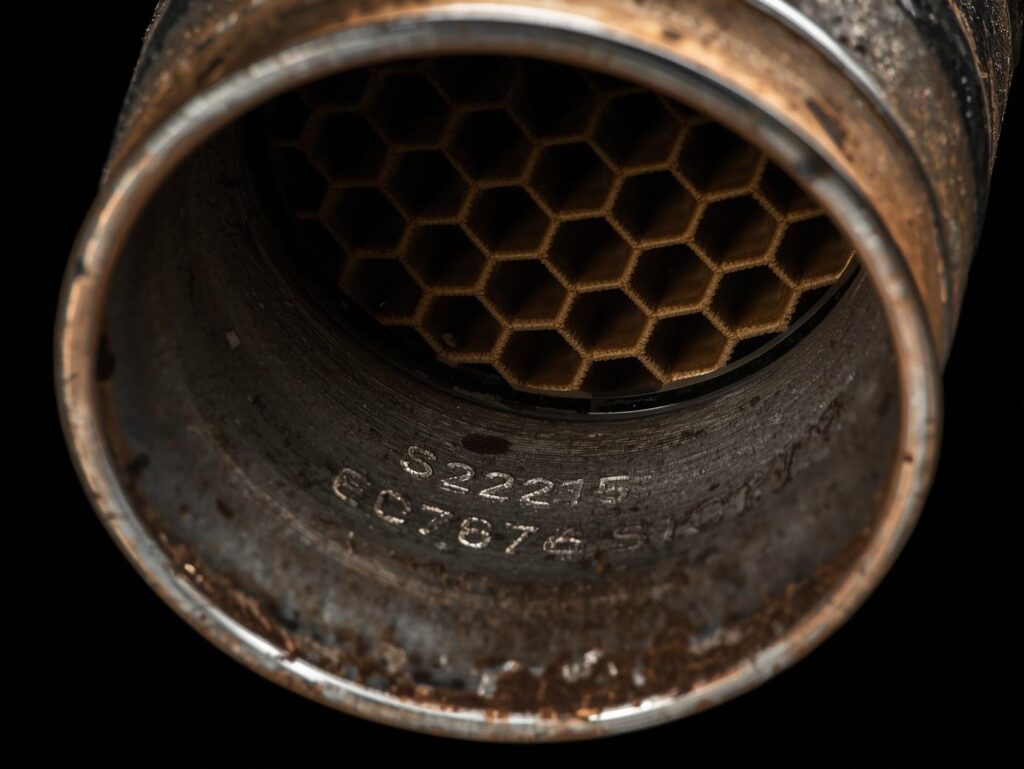
In the trade, a converter specialist is often a “Core Buyer” or a “Precious Metal Refiner.” They fall under NAICS 331410 (Nonferrous Metal Smelting and Refining). They don’t care about the steel shell of the converter. They want the “honeycomb” or “ceramic monolith” inside. This ceramic is coated with PGM (Platinum Group Metals).
- Platinum: Used primarily in diesel converters to reduce emissions.
- Palladium: The workhorse for gasoline engines.
- Rhodium: The “rarest of the rare” used to reduce nitrogen oxides. This metal can sometimes be worth ten times more than gold.
A specialist understands the “loading” of these metals. They know that a converter from a 2010 Toyota Prius is packed with way more precious metal than a converter from a big old Ford truck. If you sell them both for the same “large” price at a regular yard, you are losing hundreds of dollars in a single transaction.
How to Work with a Converter Specialist
You won’t find these buyers in a retail shop. You need to look for “Catalytic Recovery Services” or “PGM Refiners.” Companies like PMI (Precious Metals International) or United Catalytic are big players, but there are regional specialists who move through towns on set routes.
When you call a specialist, don’t ask for a “price for a converter.” You ask, “Do you buy by the serial number or by the assay?”
A pro specialist will want to see the code stamped on the side of the shell. They have apps and databases that tell them the exact “recipe” the manufacturer used for that specific part. To get the best price, you need to:
- Keep the Shell Intact: Don’t “de-can” it (cut it open) unless you are doing a bulk assay. The serial number on the shell is your proof of value.
- Leave a “Stub”: Cut the exhaust pipes about two inches from the converter. This proves the unit hasn’t been tampered with and that the ceramic “biscuit” is still firmly inside.
Starting a Catalytic Converter Buying Business
If you have a head for numbers and a decent bankroll, you can start a “Core Buying” business. You become the middleman who visits all the local muffler shops and scrap yards to buy their units.
The Setup:
- The Database: You need a subscription to a converter pricing app (like EcoCatApp or GCK). These apps cost money, but they give you the “buy price” for thousands of different serial numbers in real-time based on the current market.
- The Capital: Converters are expensive. If you want to buy ten units a day, you might need five thousand dollars in cash on hand. This is a high-stakes game.
- The Security: Because converters are small and incredibly valuable, they are high-theft items. You need a secure, alarmed cage or a vault to store your inventory.
- The Payout: You buy from a shop for, say, $150 based on your app, and you sell to the refiner for $180. The $30 “spread” is your profit. When you move 100 units a week, the math starts looking real good.
The “Secret Sauce”: The “Shake and Light” Integrity Test
I want to give you a tip that will save you from buying an “empty” shell. This is a common trick where someone knocks the ceramic out and welds the pipe back shut.
Did you know? The value is entirely in the ceramic “biscuit.” If that ceramic is missing, or if it has “shifted” and turned into dust, the value drops to zero or near-zero.
The Tip: Before you pay a cent for a converter, do the Shake Test.
- Give the unit a vigorous shake. You should hear nothing or perhaps a very slight “thud.”
- If it sounds like a box of gravel or marbles, the ceramic is “dusted.” A specialist will heavily discount a dusted unit because they can’t be sure how much of the precious metal was blown out the tailpipe.
- The Light Test: Take a high-powered flashlight and shine it down the pipe. You should see the “grid” of the honeycomb. If you see straight through to the other side, or if you see a hollow space, the unit is empty.
Integrity and the Law
We have to talk straight here. Catalytic converter theft is a massive problem, and the law has caught up. In the old days, you could sell a truckload of converters with a handshake. Those days are gone.
If you want to be a master of the yard, you must follow the laws to the letter.
- Documentation: Most states require a photo of the seller, their ID, and often the VIN of the vehicle the converter came from.
- Payment Restrictions: Many jurisdictions will not let you pay cash for converters. You have to mail a check or do an electronic transfer after a “waiting period.”
- Proof of Business: Some refiners will only buy from licensed automotive businesses (scrappers, mechanics, or core buyers).
If you try to bypass these rules, you aren’t just a scrapper – you’re a target for the police. Play it straight, keep your books clean, and only buy from reputable sources. Your reputation is the only thing that keeps the “specialist” taking your calls.
***
Ulysses’ Safety Reminder: Cutting converters is dirty work. The ceramic inside contains “Refractory Ceramic Fibers” and can be coated in heavy metals and carbon soot. If you are de-canning units or handling “dusted” converters, you must wear a high-quality N95 mask and eye protection. Breathing that dust is a fast track to lung problems. Also, watch for “hot” units – a converter fresh off a car can stay at 1,000 degrees for a long time. Don’t let a “hot” deal burn your hands or your truck bed. Stay safe and stay sharp.
Specialist Scrap Buyers
Knowledge is the only thing that doesn’t weigh down the truck.
- Gold and Silver Refiners: Skip the pawn shops and jewelry stores to sell directly to the industrial furnaces for high-percentage payouts.
- Plastic Polymer Brokers: Turn the “waste” casings from appliances into industrial feedstock like ABS and HDPE.
- Textile Rag Houses: Move bulk clothing and linens by the ton for export, vintage resale, or industrial wiping rags.
- Automotive Core Buyers: Stop selling starters and alternators for scrap weight and start selling them as rebuildable units.
- E-Waste Motherboard Specialists: Move beyond “shred” prices by grading circuit boards based on their gold and precious metal content.
- Lead-Acid Battery Wholesalers: Aggregate your car and industrial batteries into pallets to get the top-tier lead prices.
- Catalytic Converter Specialists: Use serial numbers and PGM assays to get paid for the platinum, palladium, and rhodium inside the shell.
- Cardboard and Paper Pulp Brokers: Manage high-volume fiber by baling cardboard to “Mill-Spec” standards for a steady paycheck.
- Used Oil and Chemical Recovery Firms: Turn a messy liability into “liquid gold” by selling bulk fluids for re-refining.
- Pallet Brokers: Turn used wood into a high-velocity business by sourcing and repairing GMA-standard shipping pallets.
- Glass Cullet Buyers: Sort glass by color and purity to supply the bottling and fiberglass industries.
- Appliance Parts Liquidators: Harvest the control boards and motors from “white goods” to sell to the repair industry.
- Specialty Non-Ferrous Smelters: Identify and sell high-temp “super-alloys” like Titanium, Inconel, and Monel by their specific chemistry.
- Used Tire Casing Buyers: Grade your used rubber to find “buildable” carcasses for the retread industry.
- Drum and Tote Reconditioners: Sell your clean 55-gallon barrels and IBC tanks to firms that wash and re-certify them for reuse.