
Automotive Core Buyers: Selling Parts for More Than Scrap Weight
The problem most scrappers face is that they treat every car part like a lump of metal. You spend all day pulling parts at a salvage yard or cleaning out a mechanic’s shop, but when you hit the scale, the payout doesn’t match the sweat you put in. It is frustrating to know that a brand-new alternator costs two hundred dollars, but the scrap yard is only giving you three dollars for the old one. You feel like the value of the “part” is being ignored in favor of the “weight,” and you’re right. You are losing out on the “remanufacture” value that is sitting right in your truck bed.
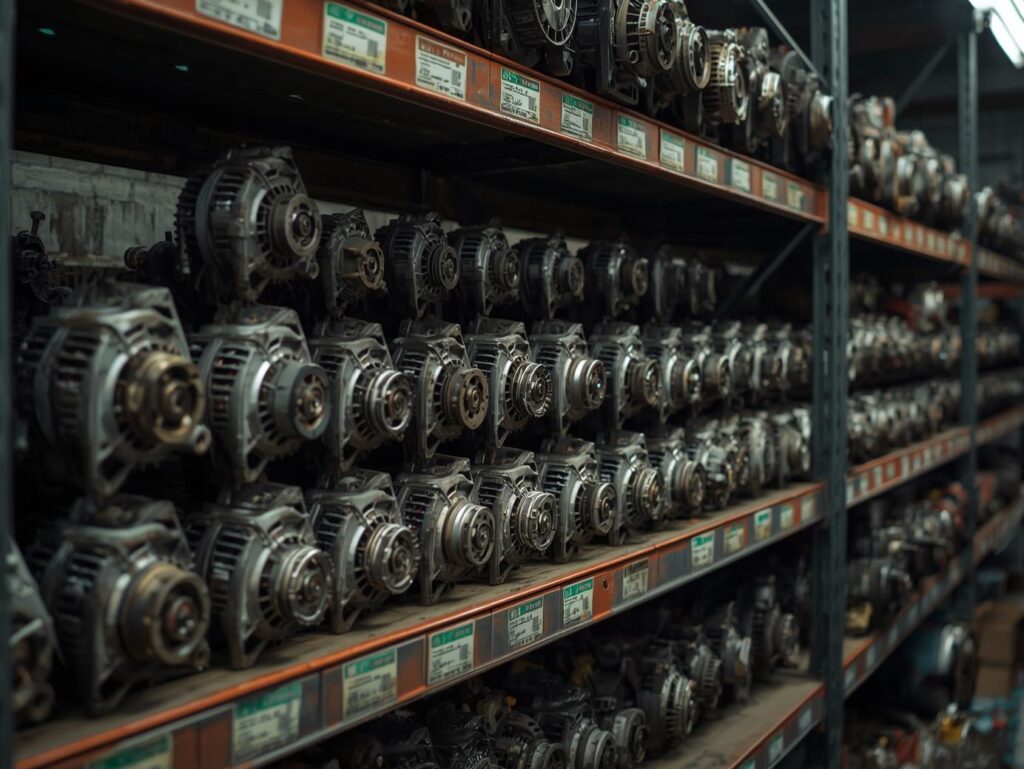
The solution is to find an “Automotive Core Buyer.” These are specialized wholesalers who purchase used components to sell them to “remanufacturers.” A remanufacturer will take that old alternator, replace the brushes and bearings, and put it back on the shelf at an auto parts store. Because they are saving the cost of casting a new housing, they are willing to pay a “core price” that is much higher than the scrap price. When you find a core buyer, you stop selling metal and start selling “units.”
What is an Automotive Core Buyer?
In the business, these buyers are the bridge between the scrap pile and the factory. They are usually listed under NAICS 423120 (Motor Vehicle Supplies and New Parts Merchant Wholesalers). They aren’t looking for “dirty” scrap; they are looking for specific part numbers and “buildable” housings.
Common items that carry a core value include:
- Electrical Units: Alternators, starters, and distributors.
- A/C Components: Air conditioning compressors are high-value cores because they are complex and expensive to build from scratch.
- Drive Train: Transmissions, torque converters, and rack-and-pinion steering units.
- Engine Parts: Turbochargers, fuel injectors, and even cylinder heads.
A core buyer will have a “Price Sheet” that lists exactly what they are paying for each specific unit. They don’t use a scale – they use a catalog.
How to Find and Work with a Core Buyer
You won’t find a core buyer at the city dump. You need to look in the industrial sections of town for “Core Suppliers” or “Remanufacturing Warehouses.” Some of the big names in the trade are companies like Re-Core or Standard Core, but there are hundreds of independent regional buyers.
When you call them, don’t ask for a “scrap price.” Ask for their “Current Core Buy-Back Sheet.” Tell them you are a “Route Collector” for mechanical scrap. They will want to know if your cores are “Original Equipment” (OEM) or “Aftermarket.”
- OEM Cores: These are parts made by the car manufacturer (like Delco or Denso). They are worth the most because they are the highest quality for rebuilding.
- Aftermarket Cores: These are cheaper “store brand” parts. Some buyers will take them at a lower price, and some won’t take them at all.
Starting an Automotive Core Brokerage
If you want to scale up, you can become the middleman yourself. You can be the person who buys from the local scrappers and mechanics and sells in bulk to the big remanufacturers.
The Setup:
- The Space: You need a dry warehouse or a covered area with plenty of shelving. Unlike iron scrap, you can’t leave cores out in the rain. If the internal parts of an alternator rust, it loses its core value and becomes junk.
- The Identification Tools: You need to learn how to read part numbers. Every core has a stamp or a sticker. You’ll need a “Cross-Reference” guide (often an app or a book provided by the big buyers) to know which parts are in high demand.
- The Logistics: Core buyers usually want “Palletized” loads. You’ll need a pallet jack and a way to strap units down so they don’t get damaged in shipping.
- The Payout: This is a volume game. You might buy an alternator from a local guy for $5 and sell it to the big core house for $12. If you move 500 units a month, you’ve built a solid, low-overhead business.
The “Secret Sauce”: The “Spin and Click” Field Test
I want to give you a tip that will help you tell a “Good Core” from a “Junk Unit” before you ever pay for it or haul it.
Did you know? A core buyer will reject any unit that has a “Cracked Housing” or a “Frozen Shaft.” If the part can’t be rebuilt, it is worth zero as a core and goes back to being scrap.
The Tip: When you pick up an alternator or an A/C compressor, perform the Spin Test. Grab the pulley and give it a hard spin.
- It should spin smoothly without a “grinding” noise.
- If it is “frozen” and won’t turn, it is likely junk.
- The Click: For A/C compressors, try to turn the inner hub. If it “clicks” or “pops,” the internal pistons are likely shattered.
By doing this five-second test, you ensure that 100% of the units in your truck are “Buildable Cores.” This protects your reputation with the buyer and ensures you aren’t wasting gas hauling junk.
Integrity and the Trade
In the core business, honesty is your best asset. If you have a unit that you know is “Locked Up” or has a hairline crack in the aluminum housing, don’t try to hide it in the middle of a pallet. The “Inspectors” at the core house will find it, and they will “Debit” your account.
If you want to be a pro, you “Grade” your own load. If you have five units that are questionable, put them in a separate box and tell the buyer, “These might be junk, check them for me.” This shows the buyer you are a professional who values their time. In return, they will be more likely to give you the “Top Tier” price on your good units.
Always check your local laws. Some states have strict rules about “Automotive Parts Recyclers” and may require you to have a specific license if you are buying and selling large volumes of cores. Stay legal, keep your cores dry, and play it straight.
***
Ulysses’ Safety Reminder: Automotive cores are greasy, heavy, and full of sharp edges. When you are stacking alternators or transmissions, watch your back and your toes. Always wear steel-toed boots and heavy-duty nitrile-coated gloves. Also, be careful of “Fluid Leaks.” A transmission can hold a lot of oil even when it looks empty. Keep “Oil-Dri” or sawdust in your shop to handle spills. Stay safe out there.
Specialist Scrap Buyers
Knowledge is the only thing that doesn’t weigh down the truck.
- Gold and Silver Refiners: Skip the pawn shops and jewelry stores to sell directly to the industrial furnaces for high-percentage payouts.
- Plastic Polymer Brokers: Turn the “waste” casings from appliances into industrial feedstock like ABS and HDPE.
- Textile Rag Houses: Move bulk clothing and linens by the ton for export, vintage resale, or industrial wiping rags.
- Automotive Core Buyers: Stop selling starters and alternators for scrap weight and start selling them as rebuildable units.
- E-Waste Motherboard Specialists: Move beyond “shred” prices by grading circuit boards based on their gold and precious metal content.
- Lead-Acid Battery Wholesalers: Aggregate your car and industrial batteries into pallets to get the top-tier lead prices.
- Catalytic Converter Specialists: Use serial numbers and PGM assays to get paid for the platinum, palladium, and rhodium inside the shell.
- Cardboard and Paper Pulp Brokers: Manage high-volume fiber by baling cardboard to “Mill-Spec” standards for a steady paycheck.
- Used Oil and Chemical Recovery Firms: Turn a messy liability into “liquid gold” by selling bulk fluids for re-refining.
- Pallet Brokers: Turn used wood into a high-velocity business by sourcing and repairing GMA-standard shipping pallets.
- Glass Cullet Buyers: Sort glass by color and purity to supply the bottling and fiberglass industries.
- Appliance Parts Liquidators: Harvest the control boards and motors from “white goods” to sell to the repair industry.
- Specialty Non-Ferrous Smelters: Identify and sell high-temp “super-alloys” like Titanium, Inconel, and Monel by their specific chemistry.
- Used Tire Casing Buyers: Grade your used rubber to find “buildable” carcasses for the retread industry.
- Drum and Tote Reconditioners: Sell your clean 55-gallon barrels and IBC tanks to firms that wash and re-certify them for reuse.